Showing posts with label Jero. Show all posts

Wednesday, November 02, 2011

Novel Novelist: Outsider Or In?


Word up, Hip Hapa Homeez! We at Watermelon Sushi World are so HAPA to call you our homeez. Because of your dedication, we’re moving towards getting our Watermelon Sushi film completed. One of the ways we’ve been doing that is by offering Hapa*Teez t-shirts to the mixed roots community. With every t-shirt purchase, you get us closer to our goal. And, you earn a rear crawl credit--your name will roll at the end of the movie.

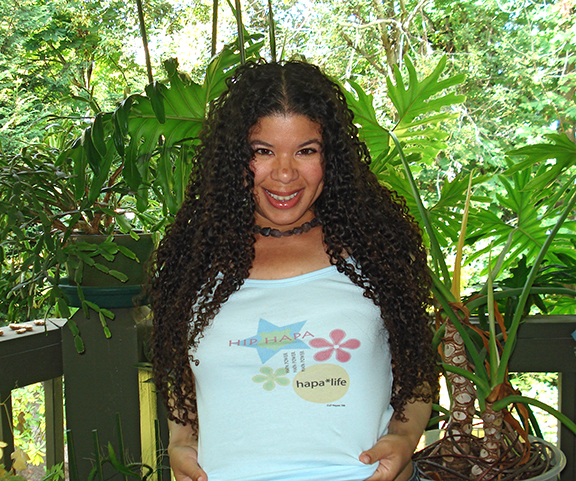
Cassie as hip HAPA homee
When you do buy a t-shirt, please email us at hapateez@me.com with your correctly-spelled name. And, if you send us a digi photo of you wearing your t-shirt, we’ll showcase you on our Watermelon Sushi and Hapa*Teez fan pages on Facebook (like Cassie, here).

Hey, here’s a shout-out to Arana, The Topaz Club founder, for her recent purchase. Join The Topaz Club group page on Facebook where mixed-race women of African descent share their stories.

Speaking of stories, this week’s featured hip hapa homee is Dmitri Ragano who just completed his novel, Employee of the Year. Your Hip Hapa first met Dmitri after stumbling upon his interview with Japan enka star Jero. After corresponding for a while, we met in person--along with Dmitri’s beautiful wife and daughter. Below, Dmitri discusses his life and how he came to write a book about a multiracial character.

Q: Tell us about your parents.

A: I am a typical garden-variety white guy so I might be something of an anomaly in the Watermelon Sushi World. My mother came from an Irish German family and my father from an Italian family. They grew up blue-collar Catholic in Pittsburgh, then broke away from the church during the Vietnam War era. They gave me an exotic name that they liked from Russian literature.

Dmitri at AFI Fest
Q: How did the way you grow up affect your life?

A:  I grew up in Wilkinsburg, Pennsylvania, a town on the edge of Pittsburgh that was predominantly African American. I had exposure to different cultures at a young age. I was often the only white guy in my elementary school class so there was exposure to art and popular culture that was different than my own. I remember very vividly when the early rap songs like "The Message" came out. That style of using rhythm and poetry to deal with real-world situations was a big influence on my fiction writing. Another influence was August Wilson, who broke onto the national scene when I was a teenager with plays about the African American experience in Pittsburgh.

During college in San Francisco, I went to Japan to study the language. For a while, I lived in a remote part of the country where I was the only foreigner in the town. The process of learning to communicate in a new language in a foreign country is slow, painful and humiliating. But once you get to the other side, the rewards are amazing. It unlocks certain parts of your brain and heart you didn't know existed. Charlemagne said, "To possess a second language is to possess a second soul."

So, the combination of these experiences created an openness and curiosity about other people's cultures. On the flip side, for better or for worse, it instilled this sense that I was an outsider and that it was sort of my destiny to go out and search to find my place in the world. Again, this is a theme with many characters in my book: they don't have a map for how to live their lives so they take scraps of maps they find along the way and try to piece them together.

Q: Were you accepted in every country where you’ve lived?

A: I have traveled to around 25 countries, but Japan is the only country outside the U.S. where I've lived. I lived in Japan several times for a total stay of about five years. It was a great experience, but you need to qualify the word "acceptance" when you talk about living in Japan as a foreigner. Japan is a very homogeneous and insular culture, and it's been that way for thousands of years. There's been no significant immigration in the whole recorded history. When you live in Japan, you live as a guest and you are treated with incredible kindness and hospitality. But like a guest in a hotel, you never really feel completely at home, you never expect to be completely accepted. You always feel like at some point you will overstay your welcome and have to leave. This is not everyone's experience, but I think it is a typical experience of most foreigners who live and work in Japan. The kanji characters for the word "gaijin" literally mean "outside person".

Q: Tell us about your interracial marriage and biracial child.

A: My wife and I met in San Francisco at a party held by these Japanese monks who lived by Haight and Fillmore. They would cook all this Buddhist vegetarian food and play reggae concerts in the basement. She was trying to learn English and I was trying to learn Japanese. We were friends for many years before we became romantically involved and decided to marry. 

Being from different cultures is challenging. You come at things from a different frame of reference. My wife's experiences being raised in Osaka are so dramatically different than what I knew growing up. The stories you tell yourself about who you are and how you should live are completely different. The good news is we love each other very deeply and share the same core values. But we've spent the early part of our lives learning to express the love and values in different ways. So it takes a long time to work this out.

For our daughter, I think this has pros and cons. She's exposed to a wide range of ideas and experiences and she knows we care about her more than anything. But I am sure sometimes it's got to be confusing for her compared to, say, having two parents who grew up in the same country with the same language, same culture and same socioeconomic background. 


Q: What motivated you to write Employee of the Year, about a mixed roots character in a multicultural workplace?

A: I think there are more young people growing up like my daughter, who are mixed roots and exposed to many different customs, values, languages and ways of life. Yet, I believe there is still a lack of stories in our popular culture that reflect this. So I felt there was an opportunity to write about characters that grow up straddling different racial and cultural experiences and how they negotiate their own identity. There's no tribal blueprint for the type of person they should try to become. It's a riddle they have to solve on their own. 
   
On top of that, my story is set in a big financial company in Los Angeles. In this city, on top of mixed roots experiences, you have mixed class experiences, interactions between people from different educational and economic backgrounds. These are all things we have so much trouble talking about in America. A company is a good setting for a story about this. In Los Angeles, the 1 percent and the 99 percent only set foot in the same zip code during working hours.
Dmitri channels Temo

Q: Is the main character, Cuauhtemoc McCarthy, based on your own personality and experiences?

A: In many ways, Temo is based on who I've tried to be. I've tried to be someone who retains a certain honesty and purity while being pragmatic about what it takes to survive and thrive in the modern world. Temo's job as a collections agent is to chase people down and convince them to pay their credit card debt. If he can't do this successfully, he loses the only way he knows how to support his wife and family. He feels ambivalent about this, just as most working people have mixed feelings about how they make a living.

Q: I first learned about you as a journalist from your interview with Jero. How does writing fiction differ from reporting?

A: The interview about Jero is a funny story about how lives and cultures intersect. My father worked for 30 years as a schoolteacher in inner-city neighborhoods around Pittsburgh. When my wife and I got engaged in 1998, we went back to Pittsburgh and visited my father's school. There was a woman from Peru who was teaching Japanese so we visited her class to talk about Japan. I remember there was a kid in the class who knew a little Japanese from his grandmother. For the next ten years, I had no contact with him, never thought about the visit to the school, et cetera. Then suddenly, in 2008, I was on a business trip in Peru and I saw something on the cable news about Jero, a guy from Pittsburgh who went to Japan and became a singing sensation. It turns out it was that same kid I'd visited at my father's high school! He remembered my father as one of his teachers. So, after leaving South America I had to go to Asia for business. My wife and I were in Japan and I decided to do an interview with Jero for the local Pittsburgh newspaper.

I think this is the best illustration of the difference between fiction and journalism. With fiction, you're taking the essence of the people and experiences from life and molding them into a narrative. With reporting, you end up discovering these real life connections and events that are so random and serendipitous that you couldn't make them up because no one would ever believe it. I mean, look at Obama. You couldn't write a fictional story about someone with his background becoming President of the United States. No one would find it plausible.

Your Hip Hapa with Jero in San Francisco
Thank you, Dmitri for sharing. Hip Hapa Homeez, you can buy a copy of Employee of the Year on Amazon or download it to Kindle for 99 cents.


Here are some of Dmitri’s feature articles:

Interview with Jero:

Interview with Howard Zinn:

Japanese cell phone culture:

And, books citing his journalism:


Andye deep in African Asian thoughts
Here's another shout-out; this one to Watermelon Sushi Associate Producer Andye AndinhaNiakan for this blog entry about Your Hip Hapa: http://africanasianbusinessandculturalexchange.wordpress.com/2011/08/12/yayoi-winfrey-japanese-african-american-film-maker-pioneer/

And, don’t forget, we’re still running our Ask My Cuz @Oprah campaign on twitter: http://ning.it/oEQYHS http://twitition.com/gneyv

Until we cross ISP’s again, remember to fan us, follow us, or friend us, but please connect!


You can also request membership in the Hip Hapa Homeez group page on Facebook.

Your Hip Hapa,
Yayoi

Wednesday, June 01, 2011

Loving The Loving's


Perhaps no other couple in U.S. history loved each other more publicly than Richard and Mildred Loving. Because of the Loving’s, the banning of interracial marriage in 16 states was finally overturned by the Supreme Court in 1967.

photo of Loving Day celebration by Michael Kirby
It’s unthinkable now, but up until then only whites were allowed to marry other whites in states like Florida, Georgia, Kentucky and Texas. And, there was actually a law on the books called the Racial Integrity Act of 1924.

Yet in Virginia, Richard and Mildred Loving—a white man and mixed black and Native American woman—were asleep in their bedroom when local police arrested them for being interracially married. The Loving’s had actually tied the knot in Washington, D.C. where their coupling was legally recognized, but upon returning to Virginia they were criminally charged.

photo of Loving Day celebration by Michael Kirby
Although my parents were also married at the same time as the Loving’s, anti-miscegenation laws hadn’t been enacted for them. No one in America really cared that a Japanese woman (former WWII enemy) cohabited with a Negro man (African slave lineage) since both were considered undesirable minorities anyway. Instead, anti-miscegenation laws were passed to perpetuate the myth of white supremacy by keeping white bloodlines pure through forbidding the mixing of it by marriage to non-whites. Despite the Supreme Court ruling in the case of the Loving’s, South Carolina still banned mixed marriages until 1998, and Alabama…2000!

photo of Ken Tanabe on the mic at Loving Day celebration
by Mauro Clerici
This week’s featured Hip Hapa Homee, Ken Tanabe, pictured above, is the founder of Loving Day in New York City. These photos are of the Loving Day celebration he organizes. 

Q: Ken, who are your parents and how did they meet?

A: My father is from Japan and my mother is from Belgium. They met while they were in college in Washington, D.C., through mutual friends and--bada boom, bada bing--here I am! I consider myself very lucky to be alive.

photo of Loving Day celebration by Mauro Clerici
Q: What inspired you to create Loving Day?

A: When I discovered the Supreme Court case, Loving v. Virginia, I felt like I had discovered a missing part of our Civil Rights education. Why wasn't this case taught in schools alongside Brown v. Board of Education, Dr. King and Rosa Parks? And with a name like "Loving", why wasn't this case as well known? Years later, the Loving case became the inspiration for my graduate thesis at Parsons the New School for Design in New York, and Loving Day was born. Today, Loving Day's mission is to fight racial prejudice through education and to build multicultural community.

Q: What are some of the events that your organization plans for that day—June 12?

A: We organize the Loving Day Flagship Celebration in New York City, which brings out 1,000 guests a year. We have free barbecue, free beer, amazing DJ's, and an incredibly diverse crowd--all under a big festival tent on the East River waterfront. Our goal is to show the world what Loving Day is about, and to inspire others to host a Loving Day Celebration of any size. Other organizations and individuals organize all of the other national/global Loving Day Celebrations. These include the Mixed Roots Film and Literary Celebration in Los Angeles, the annual MAVIN Foundation Loving Day Celebration in Seattle, and many more. Folks can find a complete list of celebrations and inspiration for their own celebrations at http://lovingday.org/celebrate

Q: Are there other things that your organization does besides the June 12 Loving Day celebration?

A: Yes! Loving Day is active all year. We are especially passionate about education, and we have been more active than ever with our collaborations with university groups. In the past six months or so, we have participated in the Harvard SWAYA Conference, a screening and discussion of the documentary One Big Hapa Family at Columbia, the Hapa Japan Conference at UC Berkeley, the Critical Mixed Race Studies Conference at DePaul in Chicago, a Biracial and Multiracial Student Association meeting at NYU, Clarvit Design Week at University of Maryland (College Park), and a Loving Day Celebration at Wesleyan. We also provide educational and community resources every day through LovingDay.org

Q: What are some of your future plans for this group?

A: We would like to see Loving Day become a new tradition that is shared among friends and passed down from generation to generation. We'd like to see a strong, sustainable multiethnic community that stays connected through Loving Day Celebrations. We encourage everyone to participate in Loving Day by celebrating and spreading the word!

Q: I met you at the recent Hapa Japan Conference in Berkeley. Do you have any thoughts you'd like to share?

A: The first Hapa Japan Conference felt like an historic moment. I had been in touch with many multiethnic community leaders with Japanese roots, but it couldn't compare to having everyone in the same space. To me, an entire conference that focuses on such a specific part of the multiethnic experience is an encouraging sign. I see it as evidence that the multiethnic community as a whole is growing and developing. My congratulations to the organizers for such an excellent conference. Also, thanks to enka superstar Jero for his performance!

Q: Do you foresee a time that there will not be a need for organizations that promote the multiethnic agenda?

A: Many people hope for (and work towards) a time when race will no longer be an issue. Even when that day comes, I believe there will still be a need for education--and people will feel the need for a sense of community with people who share a common experience. That's what Loving Day is about, and I hope that Loving Day will continue to grow and be shared for years to come.

Thank you, Ken; and, of course, thank you to the late Mr. and Mrs. Loving.


Hey, Hip Hapa Homeez--don’t forget to “like” our Watermelon Sushi and Hapa*Teez t-shirt Fan pages on Facebook. You can also request to join our Hip Hapa Homeez Group page where we’ve been discussing everything from Bruce Lee’s multi-ethnicity (did you know his mother was half white?) to mixed-race New Zealander’s Taika Waititi’s latest flick—Boy--about a Maori family. And, if you purchase one of our Hapa*Teez t-shirts at Cafe Press, you'll get a rear crawl credit on our Watermelon Sushi film. You might even look as good as Cassie, above. Oh, and you can tweet us, too: watermelonsushi

Until next time, Happy Loving Day! from...

Your Hip Hapa,
Yayoi

Wednesday, May 04, 2011

Hapa Japan Jams With Jero-san And Ms. Anime Eyes!


Hey, Hip Hapa Homeez!

Mad props to Duncan Ryuken Williams and his helpers for organizing the Hapa Japan Conference in Berkeley last month. No doubt, it was one of the best events Your Hip Hapa has ever attended. Shout-outs to all involved.

At the Berkeley campus on Friday and Saturday, the audience listened to various panels presenting on everything from Okinawan-Black mixies and the U.S. military to Japanese-Indigenous of Australia.

Jero-san gets an award while Duncan speaks and Your Hip Hapa looks on.
Photo courtesy of Edward Y. Sumoto.
Then, on Friday night, Duncan presented the New Vision Award to Japan enka singer and superstar Jero-san! Afterwards, we all had the chance to speak to, and take pix with, Jero-san. If you’re a long-time WSW blog reader, then you know how much Your Hip Hapa has admired this young man from Pennsylvania whose mother is Japanese and Black.

Later that evening, Jero-san performed a mini concert of five songs ending with a sing-along of Kyu Sakamoto’s Ue O Muite Arukou. What a bittersweet moment for those of us who remember “Kyu-chan” and his tragic death in 1985—20 some years after his Japanese language song made it to #1 in the U.S.!

At Saturday night's party; shortly after Jero-san handed the klutz some napkins.
Thanks for the snap, Fredrick Cloyd!
Following Saturday’s panel discussion, we headed to San Francisco’s Nihonmachi (J-town) for a party where Jero-san appeared with his manager. What a perfect gentleman! When Your Hip Hapa related how she had clumsily spilled sake on her hand, Jero-san immediately grabbed napkins from the table behind him and handed them to her.

Later that night, someone yelled, “All the Blackanese in the room stand with Jero-san for a picture!” What an incredible moment for all of us AfroAsians to gather around the man who crosses cultures with his incredible music. 

Blackanese in da houze with Jero-san (in red shoes) and Your Hip Hapa (on his left).
Photo courtesy of Jayson Carpenter  on behalf of Marcia Lise and The Hafu Project. 
And, of course, Your Hip Hapa talked to Jero-san about appearing in Watermelon Sushi. Wouldn’t you love to see him playing a role in the film? So would we!

So many special friendships were forged at the Hapa Japan Conference. In some cases, Your Hip Hapa finally met people for the first time that she’d been in touch with through cyberspace for decades—including painter and activist Lenore Chinn, after 12 years.

You’ll be reading about some of these fabulous folks here, over the next few months. This month, our guest is Athena Asklipiadis of Mixed Marrow. As she posed for a photo, I exclaimed, “You have anime eyes!” to which Athena replied, “Someone else told me that, too.” What do you think? Doesn’t she look as sweet and innocent as an anime character? Here's her link: http://www.mixedmarrow.org

Athena, sitting on right, with Mixed Marrow volunteers.
Q: Athena, how did your parents meet?

A: My father is Greek, Italian, Armenian and Egyptian born in Cairo. My mom is Japanese-American born in California. They met in Athens at a Japanese restaurant. At the time, my mom was a tourist and was curious about Japanese cuisine in Greece, and my father worked there.

Q: How did you grow up?

A: I grew up in a primarily African American and Latino community in South LA in the Crenshaw area. There, I was a very, very rare breed--the only person of my kind that I knew of in my whole neighborhood. I was called everything you could think of: "Chinese girl", "China" in Spanish, "white girl", and "flat faced" just to name a few. Being so different from people who lived near me and because the schools in my area were famous for shootings and gang activity, my parents sent me to school in a more diverse and safer neighborhood. But the "feeling different" thing didn't really end. I was still the minority because there weren't many mixed kids in the primarily white schools I attended. I suppose if I had siblings, it would have been a little easier having others like me around. But with time, race became less of an issue as my classmates grew up and got more mature; so, by high school it was not as much of a problem.

Q: What inspired you to create Mixed Marrow?

A: In 2007, my aunt Esther Matsuguma passed away with lymphoma and it really hit me hard. I was close to her and it was so difficult to see her suffering first-hand. After a year of coping with her loss, I was randomly approached at a Japanese festival in Los Angeles by a bone marrow donor recruiter. They asked if I was half Japanese and I said I was. Then, they told me about Krissy Kobata, a local girl my age who was in need of a bone marrow match. Her family was there signing up donors and it touched me that they were so diligent and hopeful that they would be able to save her. It made me think back to my aunt and her struggle. I had to sign up for her and for Krissy, so I did. After some thought, I decided I wanted to get more involved and volunteer with the recruitment organization that signed me up, Asians for Miracle Marrow Matches (A3M). I thought that if I could have done anything to save my aunt, I would have, but a transplant was not an option she was given. So for about one year, I volunteered with A3M. I did drives to recruit new donors, but in the process I realized our community--the mixed community--did not have this cause on its radar. I had been actively working with sites like Eurasian Nation, Addicted to Race and We Are Hapa, and I had never seen it mentioned on a large scale. I wanted to change that. So, with the help of A3M and the National Marrow Donor Program, Be The Match, I launched Mixed Marrow in 2009.

Q: What are some reasons that someone would need a bone marrow transplant?

A: Patients facing blood diseases like leukemia may be candidates for a transplant for either/or marrow or cord blood. Recent medical news has even shown positive results from stem cells helping with diseases like MS, heart disease, diabetes and even AIDS. These findings are happening every day and stem cell donation is still relatively new. That said, it’s not determined what the long-term effects are and if a complete cure can be achieved with the help of new stem cells.

Q: What are some misconceptions about donating marrow?

A: For one, there are two ways to donate; one similar to blood donation is done through the arm called PBSC donation and, the other is still done through the hipbone by needle. For the marrow donation through the hipbone--not spine like people think--a needle is used and you are not cut open surgically. You are also under anesthesia and do not feel the procedure. Also, marrow regenerates and you do not lose anything permanently.  

When it comes to cord blood donation, people hear "stem cells" and automatically think of embryonic stem cells and abortion. Cord blood stem cells come from the umbilical cord, which is usually disposed of 95% of the time. The cord blood donation process has no effect on mother or baby.

Q: One stat on your website indicates that a mixed-race person might have only 1 in 4 chances of being a match for a sibling. Does that mean mixed-race people are so different from each other even when they're related?

A: Any patient has a 1 in 4 chance of matching a sibling regardless of race. When it comes to mixed-race patients, the odds are lower because there are simply not enough donor matches in the registry. Part of the reason is because the majority of multiethnic people are under the age of 18 and, therefore, too young to donate marrow. The other reason is that there is lack of knowledge within our community and minority communities about the dire need for donors and what role ethnicity plays in matching.

Q: What are some activities your organization is involved with to bring attention to your cause?

A: Mixed Marrow hosts drives at ethnic festivals, book and art exhibits, museums, college campuses, and at various churches and businesses. Some past events include Kip Fulbeck's Exhibit openings, Loving Day's flagship event in New York, the Mixed Roots Film and Literary Festival, the Critical Mixed Race Studies Conference at DePaul, Harvard's So What Are You Anyways? Conference and Berkeley's Hapa Japan Conference. Besides onsite drives, Mixed Marrow also works to educate the public through awareness campaigns via film, radio, internet, and print media. Most recently, Mixed Marrow has teamed up with filmmaker Jeff Chiba Stearns to produce a feature-length documentary exploring the need for more diverse donors. The film is set to release in 2013.

Thank you, Ms. Anime Eyes!

Hey, Hip Hapa Homeez, for whatever reason, Facebook can’t seem to leave well enough alone. So, our Hip Hapa Homeez Group is either going to get updated or archived. Remember, this is where you can post and read info about multiethnic news. As a new Group, we’ll have to re-add everyone to its membership. If we’re archived, I believe that won’t be possible. So, please become a member when the updated version becomes available. Also, we’ve created a Facebook Fan page for Hapa*Teez t-shirts since the Watermelon Sushi film website is being redesigned. If you’ve made a Hapa*Teez purchase, please drop us a line so we can list your name correctly for rear crawl credits and mention you on the new website! Check out Hapa*Teez on Café Press so you can look as lovely as Curly Like Me author Teri LaFlesh does in her t-shirt below. You can also “like” our Watermelon Sushi Fan page, and follow us on Twitter.


Until next time, I will always be…

Your Hip Hapa,
Yayoi

Wednesday, March 02, 2011

One Brown Girl: One Diverse World


Hey, Hip Hapa Homeez! If you’ve been reading Watermelon Sushi World for any length of time, then you must know that enka singer Jero is a hero of mine. If you’re not familiar, Jero’s mother is Japanese and African American, and her mother (Jero’s grandmother) taught her grandson to speak Japanese and sing enka--a traditional Japanese style of blues that originated as agitprop during the Meiji period in Japan. As time would have it, enka lyrics later transitioned into love songs. What Jero has done as a young, mostly black man from Philly is to turn attention back onto a form of music most Japanese youth, unfortunately, have no interest in. Very few new Japanese artists these days sing enka and it is seriously in danger of dying. Koukai!


Jero on Kohaku Uta Gassen, NHK
Anyway, Jero will be performing at UC Berkeley next month at the Hapa Japan Conference, which will focus on mixed Japanese. Open to the public, the event will be held April 8 and 9 and is organized by Professor Duncan Ryuken Williams. For more information, email dunryu@gmail.com and be sure to stay tuned for my report following the conference.

Tracey Friley
With people like Jero on the planet, our world is becoming more diverse all the time. It’s always exciting to connect with those who advocate cross-cultural exchanges and Tracey Friley is one such person. 

Check out her One Brown Girl website here:
www.OneBrownGirl.com then, read about her below.

Q: Tracey, you connect with people all over the planet. Where do you get your incredible sense of worldliness? Did you grow up with parents who encouraged travel or crossing cultures?

A: Wow. I like being called worldly! I don’t remember a time when I didn’t travel, really. As a child, it was with my family, but I don’t remember specifically being encouraged to cross cultures. It has always been a way of life to get to know people from anywhere and everywhere no matter what their cultural background is. In fact, the less like me people are, the more I want to know about them. It’s just a way of life.

One Brown Girl travels the globe...
Q: What's the most interesting cultural tidbit you've discovered in your travels?

A: I don’t know how interesting it is, but I’ve come to realize that people are the same wherever you go. Some are good, some are bad. It doesn’t matter what culture they’re from. The only difference is the location.

Q: One of your website’s surveys shows that 54% of your readers would marry someone from a different religion. Do you think we're becoming more tolerant, overall? 

A: I would like to think so. Of course, you can hear the intolerant a lot louder than you hear the tolerant, so it’s hard to tell sometimes. I do think that most young people are more culturally tolerant and accepting than the previous generation.

Q: However, by the same token, another poll indicates that 32% versus 29% of your readers feel that racism will never end. Comments? 

A: That’s a hard question to answer and very thought-provoking. Racism is so prevalent on a global scale that it’s hard to imagine that it’ll ever end sometimes. 


Q: Your One Brown Girl products are incredibly relevant and popular. Do you design them yourself?

A: Thanks! Yes, the designs are all original. I'm a creative with no graphic artist abilities, so I take what’s in my brain and work with a brilliant (and patient) graphic artist who makes One Brown Girl come to life.  She is a caricature modeled after me…and you…and all of the other Brown Girls out there in the world.  

beautiful Brown Girls make a pyramid
Q: Tell us about some of your activities for Brown Girls. 

A: Right now, I own and operate a two-year old travel and learning adventure camp program for girls 11-16 nationwide, that is very important to me: 


In fact, the idea for my program can be found on Oprah’s Angel Network. I also operate a niche concierge service for adults that travel to Paris every November. I just love Paris! I have tons of ideas for the OBG brand, but I have more ideas than I have the (wo)manpower or time to implement right now, so I’m staying committed to activities that directly give women and girls a world view…for now.

Brown Girls chillin'...playin' it by ear...
Q: What’s next? 

A: I just want the cross-cultural dialogue to continue. I want to keep blogging and celebrating culture and inspire others to learn about others. I want to empower and inspire Brown Girls to feel good about the skin they’re in by reiterating interesting cultural facts and sharing travel and culture stories. I’ve got a unique thing going on in that I’m not just celebrating one cultural or ethnic group. It takes a lot of time to get people to buy into something they don’t typically do; so, most of the time, I’m just playing it by ear anyway.

Thank you, Tracey!

Well, Hip Hapa Homeez there’s a lot of excitement on the horizon. Our internet show, Sexy Voices of Hollywood, was created to financially support the production of our Watermelon Sushi film, and S.V.O.H. just launched its 10th show with distribution by Sony! You can support the film by supporting the show at www.youtube.com/sexyvoiceshollywood or by joining the S.V.O.H. event and/or fan pages. Meanwhile, there are some funky things going on at Facebook. The Hip Hapa Homeez group can’t seem to invite new members, so if you’re on Facebook, please go to the page and sign up. This is where we post news about multiracial communities, transracial adoptees and those who cross cultures. Of course, if you join the Watermelon Sushi Fan page (can that still even be done, Mr. Z.?), we will love you to death. And, by making a Hapa*Teez t-shirt purchase you'll get your name in the rear crawl credits of the film. Btw, if you’ve bought a t-shirt in the past, please get in touch with us so we can have the correct spelling of your name. Just drop us an email: hapateez@me.com Apologies for our scarce and anemic tweets, but we do promise to follow you if you follow us: http://twitter.com/watermelonsushi or http://twitter.com/sexyvoices

cutie Cassie in her Hapa*Teez t-shirt
Until we meet again, I am now and forever…

Your Hip Hapa,
Yayoi

Wednesday, August 25, 2010

Roger That: Cross-Cultural Ambassador Of Enka

Konbawa, Hip Hapa Homeez! That’s ‘good evening’ in Japanese. Once again, Watermelon Sushi World brings you a multicultural moment and tonight, we’d like to introduce you to Roger Danis, president of the Fuyumi Sakamoto Fan Club. For those of you not in the know, Fuyumi Sakamoto (or Sakamoto Fuyumi as it’s written in Japan with last name first) is a famous enka singer.

Although enka began as a form of agitprop or protest music, it evolved into blues post-WWII. Today, with the advent of J-pop (sadly, in my opinion) enka is no longer the prevailing musical form in Japan although it’s still hugely popular. Here's more info: 


If you’re ever fortunate enough to watch the NHK amateur singing contest, Nodojiman, you’ll notice how the mostly elderly audience responds to anyone singing enka--whether they stay on key or sound flat. Recently, American expat Jero-san (Jerome White, pictured above) became a huge enka sensation in Japan not only because he’s mostly black, but because he’s also a young kid who dresses with a hiphop flair and speaks fluent Japanese. Another youngish kid, Hikawa Kiyoshi (above right), is called the Prince of Enka and is a darling among the elderly. One of my favorites is Mizumori Kaori (below) who likes to toss her arm around like she’s brandishing a samurai sword. 


Q: Roger, what's a nice white guy like you doing promoting cross-cultural connections? 

A: I have European ancestry from all over, which is pretty common. As a young boy of about five, I was drawn to Asian culture rather powerfully. One early experience at a restaurant influenced me greatly, and I asked my step-dad for a record of Asian music for my sixth birthday. He went to Boston and brought back a Chinese pop record, which I loved and still have to this day. Later in life as a teen, I watched the original broadcast of Shogun, where I was exposed to Japanese language for the first time. I was already doing many musical things at the time; singing, playing an instrument, and so on. The Japanese language sounded very musical to me. (I am probably the only person in the world who thinks that.) So I have been pursuing as much knowledge as possible about the language and its culture ever since.


Q: What attracted you to enka music, and particularly Sakamoto Fuyumi?

A: Being a singer myself, I was attracted to enka because it is very Japanese in its presentation and is a very disciplined vocal style, which is very difficult to do well. I discovered Fuyumi Sakamoto in 1990, when I lived in Los Angeles. They had some Japanese programs on the weekends, and I discovered her on an enka music program. I think that Fuyumi Sakamoto, in particular, is an incredibly talented, powerful singer. She is so emotionally connected to her music. Watching her, I get the strong impression that she is doing exactly what she was put on this earth to do. That is what attracted me to her.

Q: When did you create the fan club for Fuyumi, what are some of the events that you promote, and how can people join?
    
A: I like to post performances that I have enjoyed, and that I think others would as well. I also provide any information I can find about Fuyumi’s latest music, and so on. I have some photos on the page, with the permission of the fan club portion of her website. It was the first page or group of any kind for Fuyumi Sakamoto on Facebook. I am proud of that. It is called Fuyumi Sakamoto Fans In America. Anyone in the world can join; I would love to have thousands of members. Here is the link:


Q: Do you have other enka favorites?

A: I like Ayako Fujii and a few others as well.

Q: Do you watch Japanese TV programs like Nodojiman, NHK Song Concert or Kohaku Uta Gassen that promote Japanese singers?

A: I love Kohaku Uta Gassen and Enka No Hanamichi. I think most Japanese dramas and comedies are well done.

Q: Have you been to Japan?

A: I was there in 1992 for three weeks and celebrated my 26th birthday there. It was truly awesome. I wanted to stay.

Q: Do you speak Japanese? And, how familiar are you with cultural nuances of the Japanese?

A: I would say I am at an intermediate/advanced level, but I need opportunities to speak it more. I am very familiar with Japanese culture and think highly of some aspects of it.

Yokata, Roger-san!

Once again, Hip Hapa Homeez, please like our Watermelon Sushi Fan page on Facebook and join our Hip Hapa Homeez group page where we post the latest news about cross-cultural, multiethnic and transracially adopted folks. You can also support our Watermelon Sushi film by purchasing a Hapa*Teez t-shirt.

Until next time, here’s a shout-out to all my Hip Hapa Homeez! That's you!

Your Hip Hapa,
Yayoi

Wednesday, January 20, 2010

Double Doubles (The Fuqua Sisters)

Greetings Hip Hapa Homeez! Thank you for returning for another bite of watermelon sushi. In our world, we honor those who are multicultural, multiethnic and/or multiracial—whatever your preference for the definition of someone who is mixed or who crosses cultures. We also love blowing up anyone who supports our agenda. So, if either one describes you, drop us a line at watermelonsushi@comcast.net so we can make you the next big star of our blog interview series.


This week, we offer you not one but two Hip Hapa Homeez who happen to be sisters. Thanks to filmmaker Regge Life for the word "Doubles" which he used in his movie's title to describe Japan's mixed race children.


Your Hip Hapa first met Sakura (Sah-koo-rah), the oldest Fuqua sister pictured on the right, years ago when the Watermelon Sushi website was first launched by web whiz Mia Gonzalez. Later, Sakura introduced me to her sister Miyako (Mee-yah-koh), pictured on the left, who has aspirations in the film industry.


While the siblings are adorable, having spent half their lives in Asia also makes them worldly about race and culture. And, although the same questions were asked each separately, their answers are uncannily similar. Check it out.


Q: What are two nice mixed-race girls like you doing being sisters?


Miyako:

Ha ha! Sakura is 24, and I’m 22. I tend to think our sibling dynamic is pretty typical where she acts more as the protective older sister while I look up to her and admire anything she does. Generally, we want the best for each other and are very supportive.


Sakura:

Ha ha! I am the oldest by a year, but I feel like Miyako is older than me sometimes. For the most part we get along great. I feel like we are a support system for each other. As for all siblings, we can get on each other’s nerves. I think it’s only normal.


Q: How did your parents meet?


Miyako:

Our father is African American, born in Florida and raised in New York, and our mother is from Okinawa Japan. While our dad was stationed in Okinawa, they were set up by two of their mutual friends. Ironically, the two friends (an Okinawan woman and a white American) ended up getting married and having two boys (Ken and Yuji)!


Sakura:

Our parents met through friends. My mom’s childhood friend from birth and my dad’s good friend from the military introduced my parents. I think that’s how it worked out. Then my dad taught English to a group of Okinawan people and my mom was in the class. That is how they got to know each other.


Q: What kind of hardships did your parents experience because of their marriage?


Miyako:

I do remember our mother telling us that our obasan (grandmother) was at one point against the marriage because she was worried about her oldest daughter (who took care of the family after her father died) venturing to an unfamiliar country. At that point, it wasn’t necessarily about race, but instead more about our mother identifying with another nationality.


Sakura:

For the most part, I know my parents didn’t talk to us about this much. They didn’t want us to feel discouraged because of being mixed-race children. My father’s family was very supportive. His friends on the other hand thought he should be with his own race. On my mother’s side, my grandmother was worried that people would give them a hard time in life because of their mixed-race marriage. My Okinawan great-grandmother didn’t approve at first, until she met me as a baby.


Q: You lived in Asia forever. What was that like?


Miyako:

I would say about 11 years. We lived in Camp Zama, Yokohama, Yokota Air Base, and we even lived in South Korea for a couple of years in Itaewon. I absolutely loved the experience because there was a considerably large population of biracial kids. That was the only time in my life I felt like I could represent myself accurately as a multiracial being and, most importantly, I didn’t have to explain anything to anybody...everybody just got it.


Sakura:

We lived in Japan and Korea--Japan for 9 years on military bases. We lived in Yokohama, Camp Zama, and Yokota Air Base--Korea for 2 years in Yongsan (in Itaewon). We would visit our grandmother in Okinawa during the summers. When I was with my parents, Japanese people treated us with respect. When I was alone with my friends we were treated like trouble, which we were. We were in middle school at the time.


Q: What are the major differences between Japanese and American cultures?


Miyako:

I think being biracial isn’t only limited to physical features, but extends to both of our personalities and how we act. Depending on certain situations, I can be humble and soft-spoken which I truly believe I inherited from our mother. Other times, I’m very liberal and more open-minded about topics that Japanese people still consider to be taboo.


Sakura:

A lot of differences. When I first came here I thought, “How am I ever going to survive here in America?” Now I think, “How would I ever survive in Japan if I went back?” American culture is very easygoing and casual. Japanese culture is all about doing things the right way--which is how I would like to be, but I have lived in the U.S. a bit too long. I also feel like Japanese people have a passion for their hobbies and do everything in the right way to master a passion.


Q: What do you miss about not living in Japan anymore?


Miyako:

I miss Japanese food! Although we can get things at the oriental market or when we go home to visit our parents, it’s not the same as getting it in Japan, you know? My idea of a perfect meal is their signature melon float with an authentic bowl of ramen. Yum!


Sakura:

I miss walking on the streets in Tokyo and smelling all the different smells. I live in Indianapolis Indiana and the weather is similar. I smell when the seasons change and that is when I miss Japan the most. I don’t know why, or if that even makes sense. I miss my childhood in Asia.


Q: Are you fluent in Japanese language?


Miyako:

I actually just graduated with a major concentrating in Japanese Language and Culture. I have a lot to learn about the language, but I would say my level is intermediate.


Sakura:

I am not fluent. I understand, but I get cold feet when it’s time to speak. I never learned fully, but it is my New Year’s resolution. We will see how that goes. Miyako speaks fluently.


Q: George Takei, better known as Mr. Sulu of Star Trek, once told me that I mispronounced my own name. Actually, I was enunciating each syllable because I was tired of people asking, ‘what?’ the night we met at a loud party. What similar experiences have you had with your Japanese names?


Miyako:

This actually drives me NUTS, but whenever I say “Miyako”, people automatically repeat back, “Bianca?” So we have to stand there for like 5 minutes going back and forth until they get it right, and it doesn’t matter anyway because they end up forgetting. It’s interesting because Americans recognize it as a Japanese name more than Japanese people do!


Sakura:

I am Shakira the Columbian pop singer to a lot of people. I have heard: SUK-ura, SAK-ura, Securea. Latino people call me Sakurrrra. I go with the flow, it doesn’t bother me. Even my parents both say my name differently. To make things simple, I tell people to call me Saki.


Q: Most mixed Japanese and second, third, or fourth generation Japanese Americans have Anglicized first names and Japanese middle names. What are your “name” stories?


Miyako:

I think our mom was indifferent to whether or not we had American versus Japanese names. It always seemed like dad was more into Japanese culture than our mom. Our parents chose Miyako because I was born in March, and my middle name is Akina. I think it technically means spring flower, but it is also the name of dad’s favorite pop star in the 80’s (Nakamori Akina).


Sakura:

My dad wanted us to have Japanese names. So the trade off was that my mom got to choose the names. Unlike my sister, I don’t have a middle name, which is typical for Japanese people not to have.


Q: Sakura means cherry blossom, but what does Miyako mean?


Miyako:

Miyako means “Beautiful Child of March”.


Q: Since neither of you look typically Japanese, but are knowledgeable about Japanese culture, customs, history, language and so forth, what are your biggest frustrations in the way people treat you—both Japanese and non-Japanese?


Miyako:

Living in America I’ve always felt like I wasn’t enough of something for someone whereas on the bases I was very comfortable with my identity. I’ve noticed that society has a tendency to make individuals feel like there’s something wrong with you unless you are a white, straight, male. At one point you just have to stop caring about whatever people think about you because you’ll just drive yourself crazy!


Sakura:

I struggle with this a lot. I am trying to get over it as I answer these questions. I identify with being both Japanese and African American. Asian people as they get to know me appreciate that I am half Asian, understand the culture, and respect the cultures (this is my perception, this may not be how they feel). They also realize that I am American. I am satisfied. My frustrations come from Americans. I feel like I have a lot of pressure to be “one” race or ethnicity. I can’t accept that and I won’t accept that. I know from some African Americans, they feel like I can’t accept being black, because I always say that I am both Japanese and African American. I have lost friends this way or have not been accepted by a group of people. Why shouldn’t I be able to say I am both?


Q: What do you think of Japanese African American enka singer Jero-san (pictured here) and the Japanese icon, Hello Kitty?


Miyako:

I admire Jero-san! I think he obviously had a lot drive for accomplishing what he has, and the way that he has earned the Japanese people’s respect is really inspiring.


Sakura:

I love Hello Kitty, but doesn’t everybody?


Yayoi-san, I think you introduced me to Jero-san. I watched an interview with him on Talk Asia and he discussed his grandmother a lot. He held a very strong love for her. I didn’t get to spend as much time as I wanted with my grandmother, but I always felt a strong connection with her, even though I didn’t speak much Japanese and she didn’t speak much English. It’s funny how language goes beyond words.


Career wise; Gambatte, Jero-san!!!!!!!!!!


Q: Do you watch NHK or the taiga dramas (weekly series based on Japanese feudal history)?


Miyako:

No, I haven’t seen any taiga dramas, but I occasionally watch it with our mom when I visit her and our dad.


Sakura:

No, I do not watch taiga dramas, but my grandmother loved them. I would dread when that came on. NHK, I like and wish I had the opportunity to watch more.


Q: What are you two doing these days?


Miyako:

Currently, I’m working at an agency called Stonebelt that supports people with developmental disabilities. I applied for a program called JET, so hopefully I will be able to teach English in Japan this coming summer. I’m also an aspiring screenwriter and plan on entering several contests in the coming months.


Sakura:

I am currently in school studying Tourism Convention Event Management. I love to travel and learn about culture, so this is this is the goal of my life. I work for Wyndham Hotels, full time. This will, hopefully, assist in future travels. I am a part of an Okinawan club, to try to get a better understanding of the culture where my mom comes from.


Domo arigato gozaimasu to the Fuqua sisters!


And, a shout-out to Julia Baker and Carol Sugihara Harris for their support of Watermelon Sushi through their Hapa*Teez t-shirt purchases. Remember to join our Hip Hapa Homeez group page on Facebook where we post links to stories of interest to mixed communities. While you’re on Facebook, go to the Watermelon Sushi Fan page and sign up to stay updated. And, follow us on Twitter where we’ve been posting lines from the Watermelon Sushi script.


As always, my friends, keep sharing the flava.


Your Hip Hapa,

Yayoi