 |
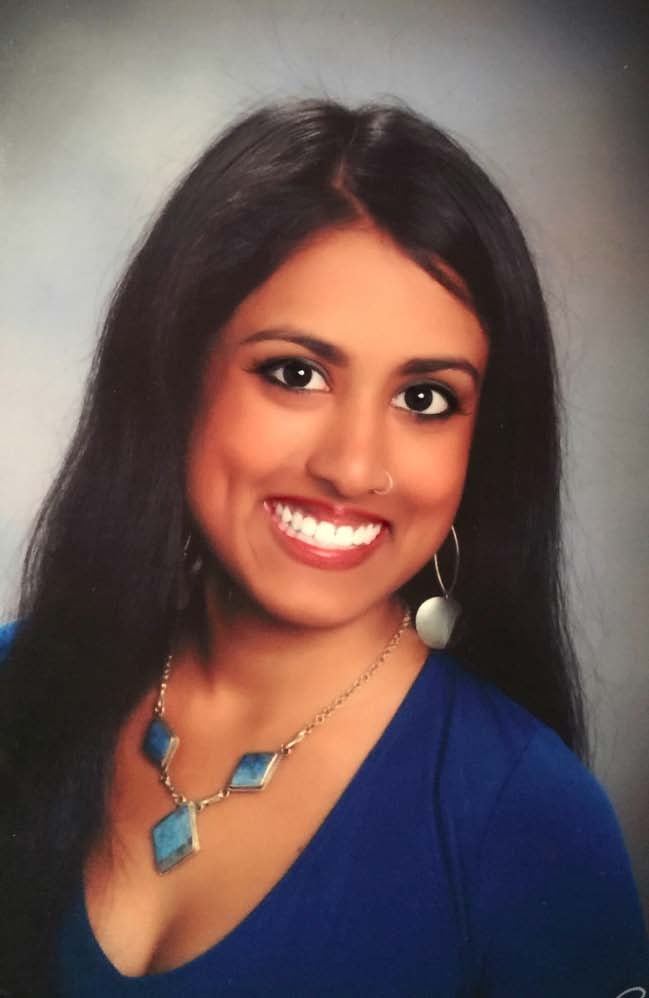
| Simone |
Welcome back to our Watermelon Sushi World. Meet this bi-month’s featured hip hapa homee, Simone Labony Labbance.
A transracial/transnational
adoptee, Simone is a recent graduate of Wellesley
College where she studied Asian American Studies and Music. Recently, Simone
completed a capstone for her Asian American Studies major, which culminated in
a full-length lecture examining the relationship between AAPI admissions at
elite colleges and race-based admission practices. Simone was also president of
Wellesley Asian Alliance, the only pan-Asian racial justice student
organization on campus. Currently, she’s job-hunting in the Boston area and
hoping for something in AAPI Advocacy. In the meantime, she also has a
part-time job at EMW Bookstore. Is that busy enough for you, hip hapa homeez? No? Well, here’s more from this active activist:
Q: Simone, who
are your parents and how did they meet?
A: My parents
are Kathie and Bob. They have the most generic white names of the ‘50s! They
are both racially white. My mother is of mixed European descent, but I think
mostly English. My father was very Italian (biological last name of Maestro),
but he was adopted into a Hungarian family, hence my last name: Labbance.
I have an older
brother, who is also adopted, and his story influences mine, so I’ll touch on
it briefly. He was adopted from an orphanage in Kolkata (many people still use
the British name of Calcutta). My parents chose India due to interest in the
culture and because it was a country known for having relatively smooth
adoption processes at the time. When my parents went to adopt a second child,
they had two hopes.
1. to adopt a
girl, so they could have “one of each”;
2. to adopt
from the same orphanage or at least the same region of India, so my brother and
I would share a culture.
We’re both
Bengali, and as you’ve probably at least heard, India is a very diverse country
from food to culture/language and even terrain/ecosystem.
My brother and
I are both from the International Mission of Hope (IMH) in Kolkata, but it
almost didn’t turn out that way! IMH was hurting financially when my parents
adopted my brother. So they grouped together with many other expectant parents
to hold a fundraiser. My parents ran an eclectic restaurant and cooked a huge
Indian meal. One mother, an artist, painted a backdrop for the dinner featuring
a scene from India, I believe…but I’m not entirely sure because I wasn’t there
or alive! My brother successfully made it over to our family in large part due
to that fundraiser. Yet during the interim year or two between the time my
brother left IMH and the time my parents would file for a second adoption, IMH
looked as though it was closing, or at least was not in the position to match
children and families. So my parents were forced to look elsewhere in India.
They were recommended to a place in the southern part of the country. But
before that adoption was close to being ready (and definitely not paired), IMH
started to accept applications for adoption again. Because I was the second
child my parents had adopted from that particular orphanage, the orphanage let
them choose the sex of the child. They, of course, chose a girl and ended up
with me!
My mother’s
first image of me was via fax (yes, back in the days of fax machines)! She
tells a great story of holding her breath while watching me appear, feet first,
her new daughter, Labony. I arrived at Logan International Airport a few months
later in the fall.
 |
| Simone with Chinese adoptee |
Q: How did you
grow up?
A: Ha
ha--definitely not in an ethnically diverse neighborhood. I grew up in rural
Vermont, the second whitest state in the USA. There was little cultural
opportunity, but my parents worked really hard to provide whatever they could
for us in that regard. My first home was located in the epitome of backwoods
Vermont with only a few children (if that!) in each grade and not a single
other person of color in the entire local community. (Unless of course you
count my brother!)
So we moved to
Central Vermont, which could offer a community with other POC, but most
importantly, other children of color. Many of these children were also adopted,
and we shared a particularly meaningful connection. Central Vermont also had
easy access to Burlington, Vermont’s hub of cultural diversity.
My mother
brought me to Indian music and dance performances, as well as international
festivals and events for Hindu holidays. At some point
in my junior high years, my mother and I attended a Bharatanatyam* (Hindustani
classical dance) performance. Through members of the crowd, we discovered there
was a massi**, who worked in my orphanage in India, present that night, too!
(I’m so grateful for the small community in Vermont at times like these!) She
is an amazing person, and we still keep in touch on occasion today. The massi,
now Auntie-ji, invited me to her house, spoke Bangla around me (though I’m
sorry to say I haven’t picked it up), taught me how to cook desi food, and wholly welcomed me into her
Bengali home and community without a second thought. I also met one of the main
dancers of the evening and began taking Bharatanatyam lessons in Burlington on
a regular basis. (A big thanks to my mother for driving me for an hour there,
waiting throughout the lesson, paying for private lessons, and then driving me
home.)
 |
| Simone plays sitar |
When I was
fourteen, my father indulged my wish for a sitar. I took sporadic lessons
throughout high school, as I had to go all the way to Portland Maine to meet
with my teacher. I already had a strong musical background through piano
lessons as a young child, and flute lessons starting in fourth grade. While
this was clearly European classical music with completely different theory,
notes, scales, everything, it did offer a base from which to work. I was very
passionate about linking my activism with music. This was especially possible
when addressing cross-cultural communication and international relationships.
 |
| Simone with Big Bang Bhangra Brass Band (B5) playing Bangra Jazz fusion |
I composed
pieces for the sitar and European chamber ensembles. The musicians often came
from a variety of backgrounds. My favorite musician to play with was Bolivian
American. The piece of music I composed that expresses this most is Me Shanti,
or into peace. The first-stage version is still posted on my MySpace musician page,
since that was the in platform of the time. This
composition was selected to open the United Nation’s International Day of
Peace ceremony in 2009 as
a musical representation of a world in conflict engaging in cross-cultural
dialogue and eventually moving into a state of positive peace. The musicians
were from three different continents (including myself). Those who performed
were of South Asian, Latin@, and Mediterranean descent to further convey the
message.
Since I haven’t
produced new music since high school (and the days of MySpace), I haven’t felt
the need to move to SoundCloud or anything else. I hope to have a page up
within a year with some new pieces though! I’ve learned a lot in my music
courses at Wellesley that
I want to apply.
 |
| Simone's collage for justice |
While Vermont
is very racially hegemonic, there are pockets of non-whites and cultural
experiences if you know where to look. I was very fortunate to grow up with
those experiences made available to me.
Q: What was
like being a child in New England?
A: As I
mentioned previously, there were other people of color and other transracial
(and transnational) adoptees in the greater Vermont community. My parents met
many parents of transracial transnational adoptees, and maintained close
friendships. Their friends’ children tended to be the same age as my brother
and me, and even occasionally from the same orphanage! This was a great support
growing up. We shared concerns with one another and processed our individual
experiences together. Though to a certain extent, it did seem natural to be
adopted and to be a different race than my parents, because those were the
experiences I was surrounded by.
 |
| WWA poster designed by Simone |
At college, it
was quite different and definitely more difficult! I attended Wellesley College
outside of Boston, and our campus was approximately 30% AAPI including
international students. Most students of Asian descent at Wellesley are not
adopted, speak their mother tongue pretty fluently, and had a much stronger vocabulary
for discussions around race, culture, and ethnicity than I did. It was
intimidating to arrive at Wellesley, but I also felt most at home with other
students who identified as AAPI. No one knew I was adopted just by looking at
me, and a few people even thought I was an Indian International student. I was
told by other Indians that I gave off a certain vibe that led them to believe
this and, according to them, was able to hold my own in discussions of Indian
culture.
Q: Do you have
the same passion for golf as your late father?
A: I actually
quite dislike golf! The only reason I hold any fondness for the sport (now) is
because my father loved it so much. He was well respected in the field as a
historian and writer. My father fell off a bridge (on a golf course, of
course!) and was paralyzed from the neck down when I was still in elementary
school. He died in 2004, just after my fifteenth birthday, of ALS, Lou Gehrig's
Disease. Now that he’s gone, I like hearing golf tournaments on in the
background (though I’d never actually sit down and watch). The sound is
comforting and reminds me of him.
I would say our
mutual passions fall into the category of history, politics, and writing. He
was very liberal and used to write incredibly out-there articles under a fake
name for a publication in England about Americans. I’m probably more like him
than I realize, but it’s hard to tell when your strongest memories of your
father are of his illness. My main memories, besides the painful ones relating
to his own suffering, are of his laughter and sense of humor, his strength
through great adversity. The most useful lesson I learned from both my parents
was personal strength during difficult times. I also learned that strength
takes on many faces and how to use multiple types of strength to endure life’s
hardships.
 |
| playing flute in the Himalayas |
Q: Have you
returned to India, or connected with any relatives there?
A: There is no
information on my birth family, so nothing there. But I have returned to India.
I studied abroad at an alternative school in India my senior year of high
school. This is where I really developed my Bengali American cultural identity.
At this school, there were roughly a combined total of 10 American and Canadian
students and approximately 30-40 Indian students. I was the only Indian
westerner and soon discovered I didn’t fully fit in with either group of
students. I wasn’t Indian in the sense that I didn’t grow up in the country and
still required a fair amount of help with certain interactions, especially
because my Hindi is quite poor. Yet I wasn’t white American. I understood
certain cultural etiquettes and was often treated by Indians (students and
community members) as though I had never left the country! It was an
interesting experience trying to balance the pieces of my identity that fit
into both worlds all while trying to remain true to myself as an individual. My
experience could not be corroborated with or related to by anyone else in the
campus vicinity.
 |
| WAA film festival poster |
Q: Do you
believe that Indian culture is inherent in you, or do you think culture is
something that's learned?
A: I believe
both. I don’t think one’s culture is inborn, but I think certain people
inherently feel more connected to the culture of their heritage. Many personal
traits are deep-rooted and even natural, evident at birth. I don’t believe in
the “babies are a blank slate” thing. For example, I would also consider myself
inherently political and compassionate. I have always been very aware of the
world and cared deeply for others. (Perhaps this is what led me to pursue
activism!) Even when I was in my first years of elementary school, I would draw
posters about current issues and hang them up around school in attempt educate
my peers about topics that called for intellectual and moral consideration.
 |
| with friend Suh, stepsinging |
With regard to
culture, part of me definitely has always shown a strong interest in my South
Asian heritage and culture. But this was fostered and reinforced by a variety
of experiences. I don’t believe that the opposite of inherently feeling Bengali
is having to learn the culture. The two are closely linked. If I am interested
in my culture from birth, this will lead me to learn about my culture and
further my knowledge of it by seeking out experiences that will educate me
about my culture. This isn’t an exclusive relationship either! Someone who has
shown absolutely no interest in their culture for their entire life could
suddenly decide it’s something they want to learn more about and pursue that
knowledge without having felt an inherent connection to their roots.
 |
| at the Iraqi Youth Leadership Exchange Program |
Q: You are so
active in your beliefs. Where do you think that comes from?
A: As I said
before, I have always shown a strong level of conscientiousness with regard to
global issues and exhibited concern with the future of the world and its
inhabitants—people and animals alike, although my work does center around
racial justice (humans).
Thank you, Simone, for sharing!
Your Hip Hapa,
Yayoi
*Bharatanatyam:
Hindustani Classical Dance, also known as temple dancing. These dances are for
the gods and goddesses of the Hindu pantheon. There are many different styles
of Hindustani temple dancing. Bharatanatyam is from Tamil Nadu in the south.
**Massi means
caretaker such as an Auntie or someone else of significance…more than, say, a
high school babysitter!
Want more, Hip
Hapa Homeez? Then, please
check out these links:
Watermelon Sushi film
Watermelon Sushi on Facebook
Watermelon Sushi World Networked Blogs on Facebook
Hapa*Teez on YouTube
Hapa*Teez on Facebook
Hapa*Teez on Café Press
War Brides of Japan v.2 on YouTube
War Brides of Japan on YouTube
War Brides of Japan on Facebook
Yayoi Lena Winfrey fan page on Facebook (sorry, but Your Hip Hapa can’t add any more friends to her regular profile page)
Twitter
Don't forget to join our Hip Hapa Homeez group on Facebook where we post articles and comments about the multicultural community.
Watermelon Sushi on Facebook
Watermelon Sushi World Networked Blogs on Facebook
Hapa*Teez on YouTube
Hapa*Teez on Facebook
Hapa*Teez on Café Press
War Brides of Japan v.2 on YouTube
War Brides of Japan on YouTube
War Brides of Japan on Facebook
Yayoi Lena Winfrey fan page on Facebook (sorry, but Your Hip Hapa can’t add any more friends to her regular profile page)
Don't forget to join our Hip Hapa Homeez group on Facebook where we post articles and comments about the multicultural community.


