Showing posts with label mixed-race. Show all posts

Friday, September 30, 2022

Falling Forward

 Aloha, Hip Hapa Homeez!

Here we are again, preparing for Fall. But the darker days and longer nights are actually a blessing. It will keep us in our studio where we will spend more time working on our creative endeavors.


For one, Watermelon Sushi (the movie) now has an Executive Producer. In the posts to come, we will name that person and the work they are doing for our film. Soon, we’ll be starting our fundraising campaign!


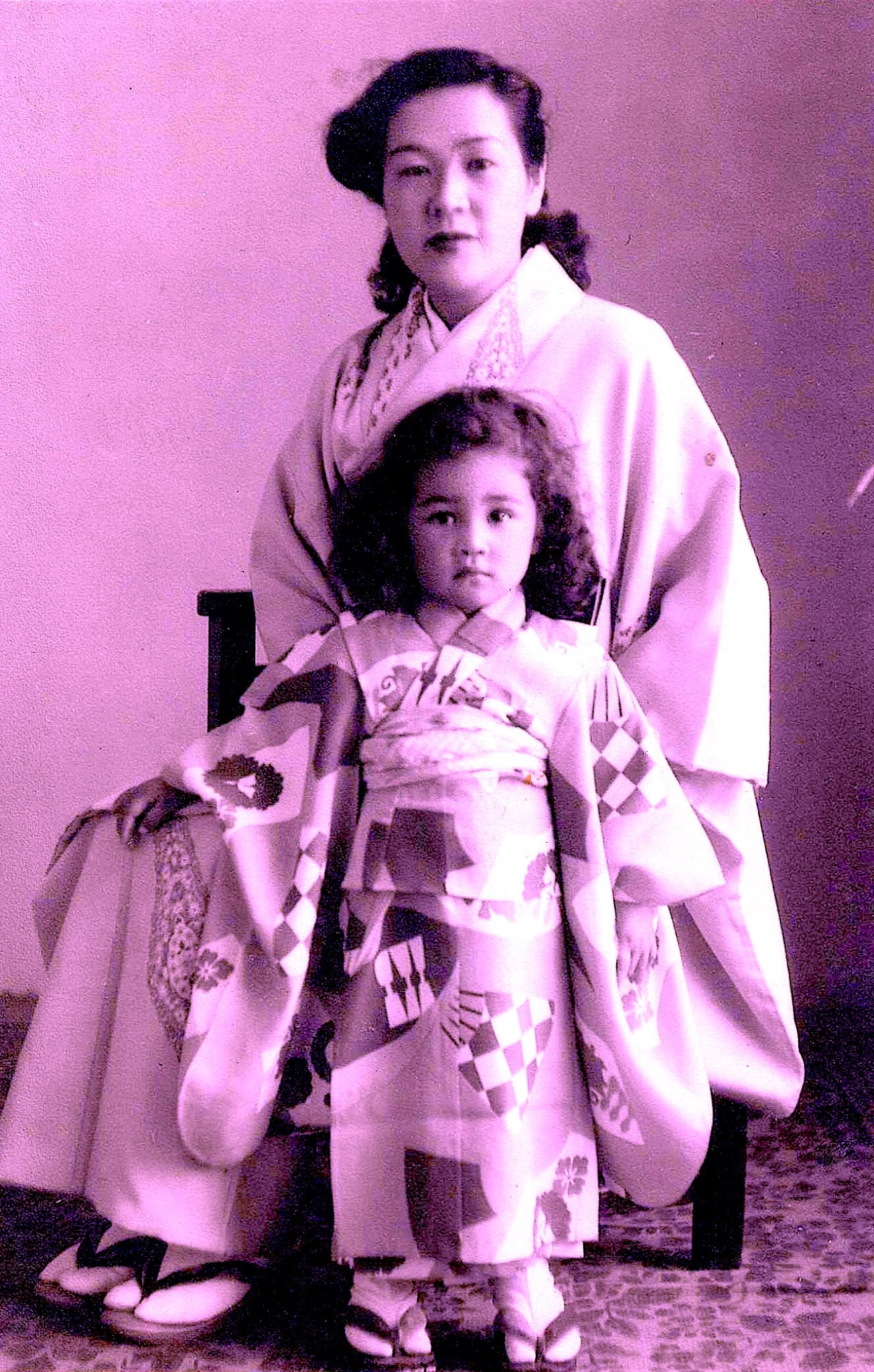
Yayoi introduces her family 


We also have our yet untitled documentary and graphic novel about a Japanese war bride artist. 


a war bride and an artist

And, we’ll be licensing artwork for both films in the very near future.


Have you stayed updated on our two Youtube channels?


Watermelon Sushi


War Brides of Japan, a docu*memory


While you’re there, please subscribe. 


You can also view the 5 War Brides of Japan, a docu*memory films on Gumroad:


Gumroad


Finally, here are the links to our films’ main websites:


Starwheels

Watermelon Sushi

War Brides of Japan, a docu*memory


As always, we’re open to interviewing mixed-race, multicultural, multiethnic and multiracial folks who are making a difference. Please drop us a line!


Meanwhile, our deepest mahalo to you—our fans since 2006—for your continuing support.


Have a beautiful autumn!


Your Hip Hapa, 


Yayoi


Wednesday, June 30, 2021

What Is Watermelon Sushi?

 Aloha, Hip Hapa Homeez!

Welcome back to Watermelon Sushi World. 

BTW, what does Watermelon Sushi mean anyway? I get asked that question a lot. 


Actually, Watermelon Sushi is the title of the film we began some 20 years ago in Los Angeles.


Watermelon, of course, is probably the most stereotyped food that's applied to black people in the U.S. And, sushi, to those of Japanese ancestry.


Over the years, many mixies began using different foods served in their households to describe their experiences of being multi-cultural. But when we first began referring to Watermelon Sushi in 1998, a lot of folks thought we were funny and strange.


In the Watermelon Sushi script, the mother is a Japanese national and the father, African American.

When we began the film in 1998, hardly anyone outside of California (and Japan) even knew what sushi was.


But in our family, it was common to have both foods on the table, especially during summers when we loved munching on ice cold watermelon after finishing a meal of norimaki and inarizushi.


In Japan, the word for watermelon is suica, which is also the name of their rail pass. Why, we're not sure.


So, yes, Watermelon Sushi is loosely based on my life as a Japanese and black female.

While we were unable to finish the film, over the years I’ve received so many messages from fans all around the world urging us to complete this important work about the mixed-race experience. Your wishes are at my command!


Finally, we are at the point in independent filmmaking where movies can be made without having to raise huge budgets through outside investors. So, watch for us in the next few months as we launch some innovative and creative ways to finance Watermelon Sushi. There will be non-donor based investment opportunities for everyone!


Please be patient as we update our websites and revamp our line of Hapa*Teez t-shirts throughout this summer.


We've also begun adding our numerous film festival awards from two other projects to some of our social media sites:

War Brides of Japan, a docu*memory (5-part series)


and


Chickens Playing Chicken (1-minute animated short)


Because this is a quarterly blog, you’ll likely find the latest info about Watermelon Sushi at the following links, especially once they’ve been updated:


Watermelon Sushi website


Watermelon Sushi on Facebook


Watermelon Sushi on Twitter


Hapa*Teez on Facebook


Lena Starwheels website


Until we meet again on September 30, I am happy to be


Your Hip Hapa,


Yayoi

Monday, September 30, 2019

War Brides of Japan Makes Way for Watermelon Sushi

Aloha, Hip Hapa Homeez.

Is this finally the week? Will the 5 short films that make up ‘War Brides of Japan, a docu*memory’ go on the market at last?

Please check out the following links where news of the releases will be announced:

Our Vimeo account:

Our website:

Our Facebook fan page:

Our Facebook business page:

Meanwhile, here is a recently won laurel and award certificate. Both 'Herstory' (an experimental short doc) and 'The Chase' (a trailer) were Official Selections at the Great Message International Film Festival of Maharashtra:


Here's a link to the award-winning trailer, 'The Chase':


And, you can view older laurels and awards at this page on our website:


Next year, we’ll return to our regular formatting and our continuing pursuit of Watermelon Sushi!


Until December 31, keep on being Hip Hapa Homeez!

Your Hip Hapa,


Yayoi

Wednesday, April 01, 2015

Meet Mexipina Mentor, Christina Torres

Aloha, Hip Hapa Homeez!

As always, Your Hip Hapa thanks you for your loving support. Since Facebook deleted all inactive accounts, the numbers for our Watermelon Sushi fans has plunged. Please “like” our Facebook page at https://www.facebook.com/watermelonsushi and help build us up again.
Christina Torres

Your Hip Hapa is so grateful for your continued views of our links at the bottom of this post. And, please tell your family, friends and multicultural community organizations to join us here every other month to read about our featured Hip Hapa Homee.

This bi-month, we’d like to introduce you to educator Christina Torres. Here’s her story:

Q: Who are you parents and how did they meet?

A: My Mexican father and Filipina mother met at the University of Southern California.

mother, father, daughter


Q: What was it like growing up?


A: Growing up was tough. 


I was at a mostly white school, so that was hard.


in Hawai'i
Q: Now that you live in Hawai’i, how different is it from your former residence in Southern California?

A: I'm way more accepted here than in SoCal. In L.A., there was also lot of racial profiling that affected me. Here in Hawai'i, everyone is mixed and in interracial relationships, which helps a lot. Still it's hard.

Q: What inspired you to become an educator?

A: I wrote about that here:


But some of it was also the realization that kids who shared my racial background, but grew up a half an hour away, had received an education that lacked a number of opportunities that mine had. I realized I had to do something about it. 

Q: How do you guide your students when it comes to developing multicultural awareness?

A: I make it a point to consistently bring up conversations around race with my students. I've actually already written a paper on facing stereotypes and biases with my students to discuss race issues.

Q: As an educator, how do you see things changing for multiracial people? Or, do you? 

A: I think that as interracial relationships become more common and race issues become more prevalent, we'll move towards a world where these issues are discussed more, and multiracial people will have more representation. I think we have a LONG way to go, however.

Q: What other ways are you active with the multicultural movement?

A: I'm part of the #educolor collective:


and talk about mixed-race issues.


Mahalo nui loa, Christina! 


Hey, Hip Hapa Homeez, until we meet again on June 3, we wish you a HAPA Spring. Remember to check us out at these sites:

Watermelon Sushi film

Watermelon Sushi on Facebook

Watermelon Sushi World Networked Blogs on Facebook
  
Hapa*Teez on YouTube

Hapa*Teez on Facebook

Hapa*Teez on Café Press

War Brides of Japan v.2 on YouTube

War Brides of Japan on YouTube

War Brides of Japan on Facebook

Yayoi Lena Winfrey fan page on Facebook (sorry, but Your Hip Hapa can’t add any more friends to her regular profile page)

Twitter

And, remember to join our Hip Hapa Homeez group on Facebook to read the most intriguing articles and comments about the multicultural community.

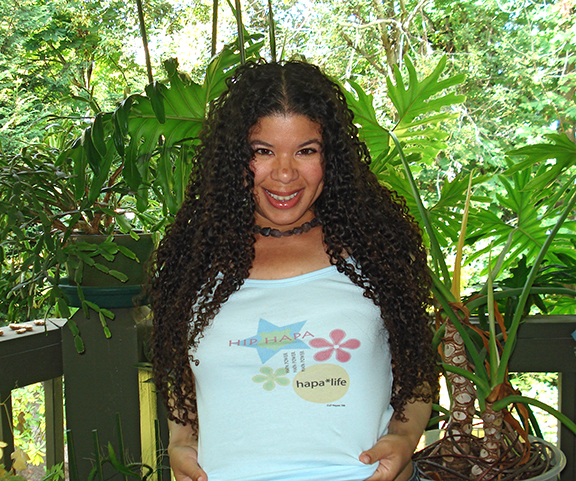
buy a HapaTeez t-shirt like this one!
Your Hip Hapa,


Yayoi

Wednesday, April 04, 2012

Messy And Beautiful Adventures From Jersey Shores To Espana

Aloha, Hip Hapa Homeez! 

Big ups, big hugs and big fat smooches to you all. Your Hip Hapa appreciates your continued purchases of Hapa*Teez t-shirts. Every penny of profit goes to support our Watermelon Sushi film, and earns you a rear crawl credit. Be sure we have the correct spelling of your name for when the film is produced and released. If you’ve already bought a Hapa*Teez, drop us a line at hapateez@me.com And, if you have a pix of yourself in one, please share.

Rob Lee shares Hapawood with you!
Your continued participation in our Hip Hapa Homeez group on Facebook indicates that the topics of being mixed-race, multi-cultural, multi-ethnic, interracially involved, transracially adopted, and/or crossing cultures continues to be important ones. Keep up the comments, discussions and posts of relevant subjects!

Watermelon Sushi and Hapa*Teez also have Facebook fan pages, and there’s a myCuz @Oprah campaign on Twitter. Follow us at watermelonsushi, read about us on HUB, and please sign the twitition. I hear my cousin Oprah is looking for OWN projects so let’s help her out.


This month’s featured Hip Hapa Homee is the hilarious and irreverent Ali Berlinksi, author of A Beautiful Mess. Chapter one is titled You’re Not White, and you can read it here:


Here are more of Ali’s links and, below them, a Q&A:


Ali in Paris
Q: You’ve had one heck of a mixed family experience. Please divulge some details.
A: In addition to being biracial, I’m also bicoastal. My birth mother is a Filipina immigrant raised in San Francisco, ergo she's wasn't your typical immigrant Filipino parent. As for my father, he's from Jersey. His other ethnicities include Polish, German and Welsh. I was born in Jersey, but moved to Northern California when I was 9 with my birth mother, Puerto Rican stepfather and two younger siblings, who are Puerto Rican-Filipino. Growing up, I visited Jersey twice a year to see my father and two older brothers, who are from my father's first marriage and half-Italian. Though I’m not ethnically Italian or Puerto Rican, I very much relate to the cultures. (See family diagram, below.)


Ali's Family Tree
Q: Were you always funny? 
A: This question is the best compliment anyone has ever given me! Um, no. I don't consider myself funny but rather, entertaining. If anything, I've always been eccentric and a bit awkward, which happens to be in fashion these days as far as comedy is concerned. Consider me your hot, female, ethnic Michael Cera. I don't try to be funny. If I make people laugh then great, but when this humor trend eventually changes, and it will, I'll continue being my zany self.  
Ali before she left NYC
Q: You currently live in Spain. I'm guessing being half Filipina has something to do with it, right?
A: Three words: chorizo, wine and siesta. This place is a foodie's paradise. Before moving abroad, I applied to teaching programs all over the world. I had to get the hell out of NYC. My life there was too comfortable and I desperately needed a change. Spain was my first choice. For one, they really have their priorities straight--work to live and not live to work as we tend to do in the U.S. They also have amazing coffee, which if I were Popeye would be my spinach. I'm sure my Filipino "Puerto Rican" roots did play a role. For, while the culture is different from my own, it's still very familiar. Still, the most important thing to me was that I radically change my life. Moving abroad seemed to be a fun way to do that.


Q: What are the biggest differences in identifying as a multi-cultural person in Spain versus presenting yourself like that in the U.S.?
A: Whenever you're considered a "not", it reinforces whatever qualities make you a "not". In the U.S., I'm considered "Not White" and so I align myself with minorities even though many minorities would consider me "whitewashed". Even the “nots” have “nots”.
The idea of a biracial person doesn't exist in Spain. They're a very homogeneous insulated society. Moreover, the Spanish don't tend to think in terms of race, but culture. To them, I'm just different, period. Thus, here I'm "Not Spanish" which reinforces my American identity. Subsequently, I crave peanut butter more than I ever did when I was in the states. By no means are the Spanish egalitarians; rather, they have a completely different understanding and relationship with these ideas.
Ali goes "all Waiting to Exhale"...
Q: What inspired you to write A Beautiful Mess?
A: This book has been a dream of mine since forever. In a way, I've always understood my life to be different. After going through some really tough breakups and realizations, I decided to take some time and reboot. Writing has always been my sanity, and writing this book provided me with a productive way to express some really tough emotions. Although the book is deeply personal, the issues I discuss are very relatable: divorced single-parents, sibling rivalry, racial identity, heartache, cancer, death of a loved one, career struggles, gay, "handicapped" and bipolar family members, and so on. Clearly, my life can be ridiculous, which is why I think it’s so important to laugh. 
Right now, the book is available exclusively through pubslush.com. There, you can read a chapter and support my book for as little as $10. I need to have 1000 people pre-order it in the next 60 days in order to get published. I need as much help spreading the word so tell everyone you know--and don’t know, for that matter! When I reach this goal I'm published just like any other author. Plus, those who pre-order can list themselves as an original discoverer of my book. It's a company I'm really passionate about because not only does it help me get published, but it also helps promote literacy in third world countries. For every book you buy, a book is donated to the featured charity. Tell everyone you know!
Q: Some of the encounters you describe in your essays are not vastly different from what most mixed-race people experience as far as being constantly questioned and validated. Are you writing to assure the multicultural community, or is it more for informing the non-mixed population about our issues?
A: My essays are intended for everyone and the only message I hope to convey is that everything in life is a choice. Aside from that, I'd be flattered if a person reads an essay and has an “ah-ha” moment, thereby motivating questions and eventually, a dialogue. But then, you can never tell what people are going to take from your work. 
Q: What's next? Another book, films, TV appearances? 
A: After this book gets published, I plan to do lots of publicity, which will probably include TV appearances, book talks and tours this summer. It’s exciting and yet daunting. Whenever you put yourself out there, you risk getting hurt. But I stand by my book and am excited to share it. And, I’m writing a second book that will focus on my life now that I've moved to Spain.

Bravo! Ole muy bien, Ali, and mucho gracias.


So far, Hip Hapa Homeez, 2012 has been beyond busy for us. Mad props to each one of you for coming along on this journey towards One World. Mahalo nui loa to you who know who you are. Until next month, when we present another Hip Hapa Homee, I am

Your Hip Hapa,


Yayoi

Wednesday, May 04, 2011

Hapa Japan Jams With Jero-san And Ms. Anime Eyes!


Hey, Hip Hapa Homeez!

Mad props to Duncan Ryuken Williams and his helpers for organizing the Hapa Japan Conference in Berkeley last month. No doubt, it was one of the best events Your Hip Hapa has ever attended. Shout-outs to all involved.

At the Berkeley campus on Friday and Saturday, the audience listened to various panels presenting on everything from Okinawan-Black mixies and the U.S. military to Japanese-Indigenous of Australia.

Jero-san gets an award while Duncan speaks and Your Hip Hapa looks on.
Photo courtesy of Edward Y. Sumoto.
Then, on Friday night, Duncan presented the New Vision Award to Japan enka singer and superstar Jero-san! Afterwards, we all had the chance to speak to, and take pix with, Jero-san. If you’re a long-time WSW blog reader, then you know how much Your Hip Hapa has admired this young man from Pennsylvania whose mother is Japanese and Black.

Later that evening, Jero-san performed a mini concert of five songs ending with a sing-along of Kyu Sakamoto’s Ue O Muite Arukou. What a bittersweet moment for those of us who remember “Kyu-chan” and his tragic death in 1985—20 some years after his Japanese language song made it to #1 in the U.S.!

At Saturday night's party; shortly after Jero-san handed the klutz some napkins.
Thanks for the snap, Fredrick Cloyd!
Following Saturday’s panel discussion, we headed to San Francisco’s Nihonmachi (J-town) for a party where Jero-san appeared with his manager. What a perfect gentleman! When Your Hip Hapa related how she had clumsily spilled sake on her hand, Jero-san immediately grabbed napkins from the table behind him and handed them to her.

Later that night, someone yelled, “All the Blackanese in the room stand with Jero-san for a picture!” What an incredible moment for all of us AfroAsians to gather around the man who crosses cultures with his incredible music. 

Blackanese in da houze with Jero-san (in red shoes) and Your Hip Hapa (on his left).
Photo courtesy of Jayson Carpenter  on behalf of Marcia Lise and The Hafu Project. 
And, of course, Your Hip Hapa talked to Jero-san about appearing in Watermelon Sushi. Wouldn’t you love to see him playing a role in the film? So would we!

So many special friendships were forged at the Hapa Japan Conference. In some cases, Your Hip Hapa finally met people for the first time that she’d been in touch with through cyberspace for decades—including painter and activist Lenore Chinn, after 12 years.

You’ll be reading about some of these fabulous folks here, over the next few months. This month, our guest is Athena Asklipiadis of Mixed Marrow. As she posed for a photo, I exclaimed, “You have anime eyes!” to which Athena replied, “Someone else told me that, too.” What do you think? Doesn’t she look as sweet and innocent as an anime character? Here's her link: http://www.mixedmarrow.org

Athena, sitting on right, with Mixed Marrow volunteers.
Q: Athena, how did your parents meet?

A: My father is Greek, Italian, Armenian and Egyptian born in Cairo. My mom is Japanese-American born in California. They met in Athens at a Japanese restaurant. At the time, my mom was a tourist and was curious about Japanese cuisine in Greece, and my father worked there.

Q: How did you grow up?

A: I grew up in a primarily African American and Latino community in South LA in the Crenshaw area. There, I was a very, very rare breed--the only person of my kind that I knew of in my whole neighborhood. I was called everything you could think of: "Chinese girl", "China" in Spanish, "white girl", and "flat faced" just to name a few. Being so different from people who lived near me and because the schools in my area were famous for shootings and gang activity, my parents sent me to school in a more diverse and safer neighborhood. But the "feeling different" thing didn't really end. I was still the minority because there weren't many mixed kids in the primarily white schools I attended. I suppose if I had siblings, it would have been a little easier having others like me around. But with time, race became less of an issue as my classmates grew up and got more mature; so, by high school it was not as much of a problem.

Q: What inspired you to create Mixed Marrow?

A: In 2007, my aunt Esther Matsuguma passed away with lymphoma and it really hit me hard. I was close to her and it was so difficult to see her suffering first-hand. After a year of coping with her loss, I was randomly approached at a Japanese festival in Los Angeles by a bone marrow donor recruiter. They asked if I was half Japanese and I said I was. Then, they told me about Krissy Kobata, a local girl my age who was in need of a bone marrow match. Her family was there signing up donors and it touched me that they were so diligent and hopeful that they would be able to save her. It made me think back to my aunt and her struggle. I had to sign up for her and for Krissy, so I did. After some thought, I decided I wanted to get more involved and volunteer with the recruitment organization that signed me up, Asians for Miracle Marrow Matches (A3M). I thought that if I could have done anything to save my aunt, I would have, but a transplant was not an option she was given. So for about one year, I volunteered with A3M. I did drives to recruit new donors, but in the process I realized our community--the mixed community--did not have this cause on its radar. I had been actively working with sites like Eurasian Nation, Addicted to Race and We Are Hapa, and I had never seen it mentioned on a large scale. I wanted to change that. So, with the help of A3M and the National Marrow Donor Program, Be The Match, I launched Mixed Marrow in 2009.

Q: What are some reasons that someone would need a bone marrow transplant?

A: Patients facing blood diseases like leukemia may be candidates for a transplant for either/or marrow or cord blood. Recent medical news has even shown positive results from stem cells helping with diseases like MS, heart disease, diabetes and even AIDS. These findings are happening every day and stem cell donation is still relatively new. That said, it’s not determined what the long-term effects are and if a complete cure can be achieved with the help of new stem cells.

Q: What are some misconceptions about donating marrow?

A: For one, there are two ways to donate; one similar to blood donation is done through the arm called PBSC donation and, the other is still done through the hipbone by needle. For the marrow donation through the hipbone--not spine like people think--a needle is used and you are not cut open surgically. You are also under anesthesia and do not feel the procedure. Also, marrow regenerates and you do not lose anything permanently.  

When it comes to cord blood donation, people hear "stem cells" and automatically think of embryonic stem cells and abortion. Cord blood stem cells come from the umbilical cord, which is usually disposed of 95% of the time. The cord blood donation process has no effect on mother or baby.

Q: One stat on your website indicates that a mixed-race person might have only 1 in 4 chances of being a match for a sibling. Does that mean mixed-race people are so different from each other even when they're related?

A: Any patient has a 1 in 4 chance of matching a sibling regardless of race. When it comes to mixed-race patients, the odds are lower because there are simply not enough donor matches in the registry. Part of the reason is because the majority of multiethnic people are under the age of 18 and, therefore, too young to donate marrow. The other reason is that there is lack of knowledge within our community and minority communities about the dire need for donors and what role ethnicity plays in matching.

Q: What are some activities your organization is involved with to bring attention to your cause?

A: Mixed Marrow hosts drives at ethnic festivals, book and art exhibits, museums, college campuses, and at various churches and businesses. Some past events include Kip Fulbeck's Exhibit openings, Loving Day's flagship event in New York, the Mixed Roots Film and Literary Festival, the Critical Mixed Race Studies Conference at DePaul, Harvard's So What Are You Anyways? Conference and Berkeley's Hapa Japan Conference. Besides onsite drives, Mixed Marrow also works to educate the public through awareness campaigns via film, radio, internet, and print media. Most recently, Mixed Marrow has teamed up with filmmaker Jeff Chiba Stearns to produce a feature-length documentary exploring the need for more diverse donors. The film is set to release in 2013.

Thank you, Ms. Anime Eyes!

Hey, Hip Hapa Homeez, for whatever reason, Facebook can’t seem to leave well enough alone. So, our Hip Hapa Homeez Group is either going to get updated or archived. Remember, this is where you can post and read info about multiethnic news. As a new Group, we’ll have to re-add everyone to its membership. If we’re archived, I believe that won’t be possible. So, please become a member when the updated version becomes available. Also, we’ve created a Facebook Fan page for Hapa*Teez t-shirts since the Watermelon Sushi film website is being redesigned. If you’ve made a Hapa*Teez purchase, please drop us a line so we can list your name correctly for rear crawl credits and mention you on the new website! Check out Hapa*Teez on Café Press so you can look as lovely as Curly Like Me author Teri LaFlesh does in her t-shirt below. You can also “like” our Watermelon Sushi Fan page, and follow us on Twitter.


Until next time, I will always be…

Your Hip Hapa,
Yayoi